
Cacti tiene un cero día sin parche: cuatro peticiones HTTP y el atacante manda en el servidor
Un investigador publicó la prueba de concepto 4HTTP2SHELL contra Cacti 1.2.31. Basta con que la cuenta de invitado esté activa: inyección SQL almacenada, poller manipulado y ejecución de comandos. No hay CVE ni corrección.
A researcher published the 4HTTP2SHELL proof of concept against Cacti 1.2.31. All it takes is an enabled guest account: stored SQL injection, a tampered poller and command execution. No CVE, no fix.
Cuatro peticiones y ninguna credencial
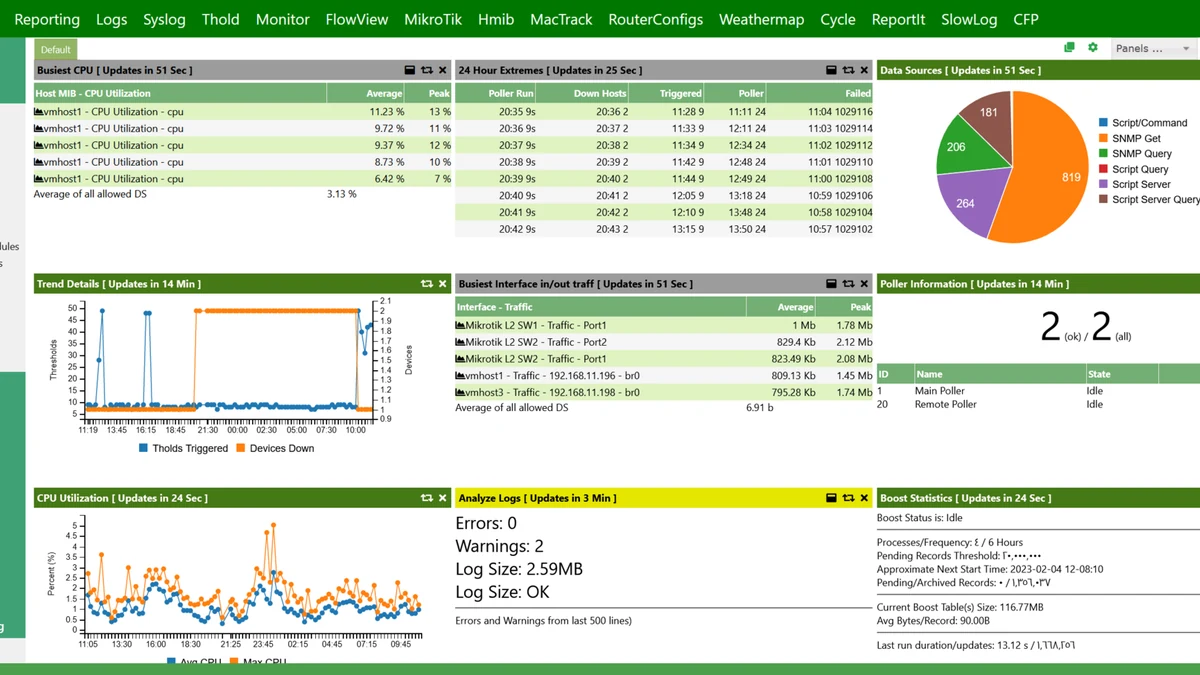
Cacti es el pegamento de muchas redes: un panel de código abierto que dibuja en gráficas el estado de routers, switches, servidores y cortafuegos por SNMP. Un investigador que firma como «ek0ms savi0r», del colectivo Church of Malware, publicó el jueves —festivo de Acción de Gracias en Estados Unidos— una prueba de concepto que convierte ese panel en una puerta abierta. La llamó 4HTTP2SHELL, antes 4HTTP2ROOT, y la acompañó de un informe técnico, un vídeo y un repositorio en GitHub bautizado «Sad Girls 0day Club». No hay parche ni identificador CVE.
El fallo afecta a Cacti Core 1.2.31, la versión más reciente, siempre que esté habilitada la cuenta de invitado. Cacti la desactiva por defecto desde la versión 0.8.7, lo que reduce el universo expuesto, pero en instalaciones antiguas o mal configuradas sigue viva.
La cadena, paso a paso
La primera debilidad es que un invitado puede escribir texto libre donde debería ir un número. El parámetro se llama preview_graphs_per_page y decide cuántas gráficas se ven por página; se envía por auth_profile.php?action=update_data. Lo que el investigador guarda ahí no es un entero, sino sentencias SQL que quedan almacenadas sin validar.
El segundo eslabón es el momento en que esa cadena se ejecuta: al abrir graph_view.php con los filtros por defecto, Cacti la interpreta como una inyección SQL de segundo orden. Con ella se modifica una fila de la tabla del poller, el proceso que recoge las métricas. El tercero es que el controlador PDO de PHP acepta sentencias apiladas a través de la cláusula LIMIT. Y el cuarto, el más grave: el endpoint graph_realtime.php lee esa fila y pasa el comando guardado a la función popen() sin lista blanca ni saneamiento. Cuatro peticiones HTTP y el visitante ejecuta órdenes como el usuario que corre Cacti.
«Encontré un camino desde una sesión HTTP nueva y sin autenticar hasta la ejecución de comandos como el usuario del servidor Cacti en cuatro peticiones. Sin inicio de sesión. Sin clave de API válida. Sin phishing.»
Root, o casi
El investigador demostró acceso de root, pero la firma watchTowr matiza que los privilegios dependen de la cuenta que ejecuta el servidor web y el poller; en muchas instalaciones es una cuenta de servicio con pocos permisos. El daño, en todo caso, no termina en el servidor de monitoreo: Cacti guarda credenciales y contraseñas SNMP de los equipos que vigila, así que quien entra ahí tiene un punto de apoyo hacia el resto de la red. También puede alterar el poller para silenciar alertas.
Mientras no haya corrección, la recomendación es desactivar la cuenta de invitado y limitar la interfaz web a redes de confianza. La nota amarga es de método: el autor denuncia años de informes de seguridad desestimados o cerrados sin respuesta.
Fuentes: BleepingComputer, The Hacker News, SecurityOnline, Aviatrix Threat Research.
Four requests and no credentials
Cacti is the glue of many networks: an open-source panel that graphs the health of routers, switches, servers and firewalls over SNMP. A researcher going by «ek0ms savi0r», from the Church of Malware collective, published a proof of concept on Thursday — Thanksgiving Day in the United States — that turns that panel into an open door. He called it 4HTTP2SHELL, previously 4HTTP2ROOT, and shipped it with a technical write-up, a video and a GitHub repository named «Sad Girls 0day Club». There is no patch and no CVE identifier.
The flaw affects Cacti Core 1.2.31, the latest version, as long as the guest account is enabled. Cacti disables it by default from version 0.8.7 onwards, which shrinks the exposed pool, but older or misconfigured installs keep it alive.
The chain, step by step
The first weakness is that a guest can write free text where a number belongs. The parameter is preview_graphs_per_page and it decides how many graphs appear per page; it is submitted through auth_profile.php?action=update_data. What the researcher stores there is not an integer but SQL statements, kept without validation.
The second link is when that string runs: opening graph_view.php with the default filters makes Cacti read it as a second-order SQL injection. With it, an attacker edits a row in the poller table, the process that collects metrics. The third is that PHP's PDO driver accepts stacked statements through the LIMIT clause. And the fourth, the worst: the graph_realtime.php endpoint reads that row and passes the stored command to PHP's popen() with no allowlist and no sanitisation. Four HTTP requests, and the visitor runs commands as the user that runs Cacti.
«I found a path from a fresh, unauthenticated HTTP session to command execution as the Cacti server user in four requests. No login. No valid API key. No phishing.»
Root, or close to it
The researcher demonstrated root access, but the firm watchTowr notes that privileges depend on the account running the web server and the poller; in many deployments that is a low-privileged service account. The damage does not stop at the monitoring server anyway: Cacti stores credentials and SNMP passphrases for the devices it watches, so whoever gets in gains a foothold across the rest of the network. They can also tamper with the poller to silence alerts.
Until a fix lands, the advice is to disable the guest account and restrict the web interface to trusted networks. The bitter footnote is about method: the author complains of years of security reports dismissed or closed without an answer.
Fuentes: BleepingComputer, The Hacker News, SecurityOnline, Aviatrix Threat Research.
Sigue leyendo
Keep reading
College Board confirma la brecha: entraron a las cuentas nuevas y a las solicitudes de ayuda financiera
La organización del SAT y los exámenes AP dice que los atacantes usaron herramientas de IA para encontrar un fallo en la página de registro. Desactivó el registro de cuentas y el CSS Profile en plena temporada de solicitudes de ingreso.
College Board confirms the breach: attackers got into new accounts and financial aid applications
The organisation behind the SAT and AP exams says attackers used AI tools to find a flaw on the sign-up page. It switched off new account registration and the CSS Profile in the middle of college application season.
Los instaladores oficiales de Q-Dir y DesktopOK traían un RAT de Python: abrían el programa de verdad y espiaban por detrás
AhnLab confirmó que algunos instaladores servidos por la web oficial de SoftwareOK, incluidos los de la ruta de actualización, estaban manipulados. Ejecutan la utilidad legítima, firmada y con el hash publicado, mientras descargan un troyano que lleva su propio intérprete de Python.
Official Q-Dir and DesktopOK installers carried a Python RAT: they opened the real program and spied behind it
AhnLab confirmed that some installers served by SoftwareOK's official site, including those on the update path, had been tampered with. They run the legitimate, signed utility matching the published hash while downloading a trojan that ships its own Python runtime.
Un troyano escondido al final de dos modelos de IA: 2.428 descargas en Hugging Face y una plantilla que pide ejecutar PowerShell
Un escaneo de los 3,27 millones de repositorios públicos de Hugging Face encontró cinco modelos GGUF maliciosos, dos de ellos con un programa de Windows pegado después del último tensor. Días después, la plantilla de chat se cambió para que el propio modelo dictara el comando que lo despierta.
A trojan hidden at the end of two AI models: 2,428 downloads on Hugging Face and a template that asks you to run PowerShell
A scan of all 3.27 million public Hugging Face repositories found five malicious GGUF models, two of them carrying a Windows program appended after the last tensor. Days later the chat template was rewritten so the model itself prints the command that wakes it up.